
When things start to go wrong and then escalate into a major disagreement, whether it is at home or at work, the effect is both mental and physical. That upset to your day can fester and grow into something that then becomes a major issue. At this point, opposing views can harden, becoming fixed, making any attempt to discuss and resolve things very difficult.
Sometimes we might think that the easiest solution is just to walk away and try and put this behind us. However, it may not be that simple. It may be difficult to get another job. It may be that this is the job you really like when it isn’t in its present horrible state. It may be that you feel that if you don’t make a stand over something, others will also suffer in the future and therefore you would not be showing good leadership values.
Whatever the reason, if the walking away option is not the one to take, then it is incredibly important to understand exactly what it is that you are looking for in terms of an outcome and to understand the ground underneath your feet. Just as in martial arts, or hillwalking, or climbing, you need to have a good sense of how you are anchored and what the effect of different pressures is likely to be on your personal stability both mental and physical.

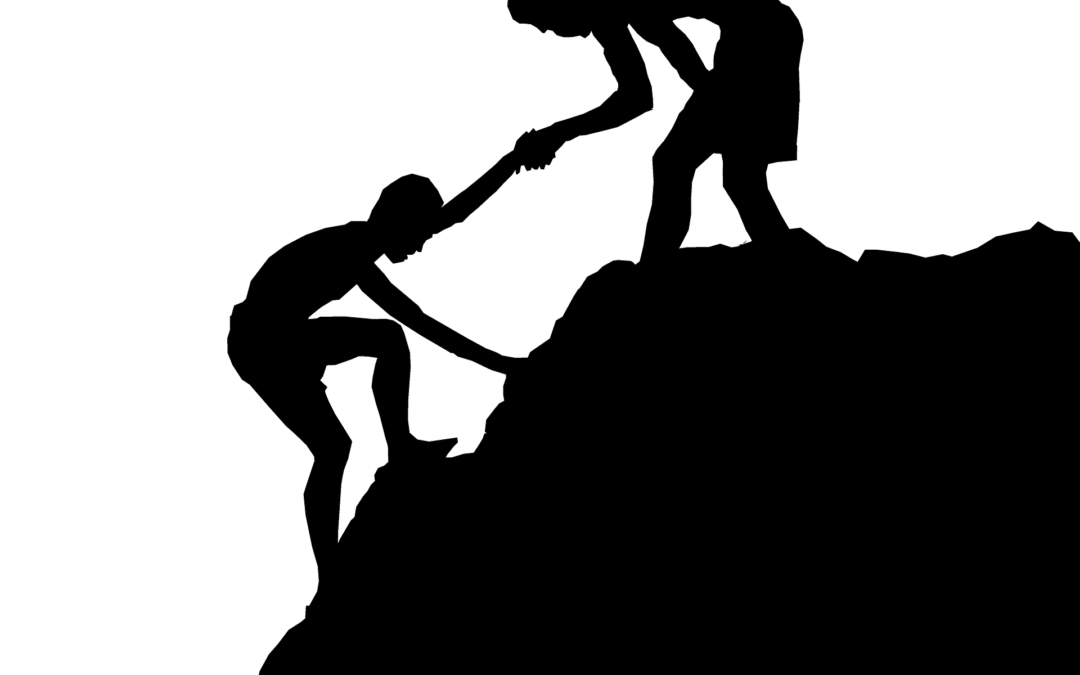
Just as in the picture of the two climbers supporting each other, it is a good thing to have a sounding board or someone else on your team. This person can be a lawyer or an advocate on your behalf or even just a supportive and sympathetic friend. They can help you stay strong mentally and physically.
However, It is not the mediator’s role. They are trying to find a common ground to resolve the problem. A mediator’s role is a strictly neutral one supporting all the parties to the dispute to reach a solution that has come from them, not an imposed solution or the product of advice from the mediator.